
This is the second post in a series on artificial consciousness. For an introduction and a road map, see Artificial Consciousness: Introduction.
Let’s consider whatever informal definition of consciousness you happen to have. Chances are, it centers on the concept of awareness of environment and of self. Is awareness a yes/no proposition, or is it a matter of degree?

Nap Time
If you have ever awakened from a nap, or ever had too much to drink, you know that awareness of one’s environment is a matter of degree. Case closed.
Awareness of self is trickier. At first blush, it seems that either one is aware of oneself or one isn’t. But consider the tragic situation of dementia. I knew someone (now deceased) who was sliding deeper into Alzheimer’s Disease. He was largely unaware of his condition. In one of his lucid moments, though, his wife said it was time for him to move out of their home so he could have better full-time care. “Am I as bad as that?” he said, quite upset. He had had only a vague awareness of his condition.
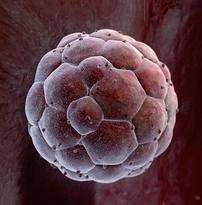
Human Blastocyst
Consider a developing human, from the moment of conception onward. Surely he or she is not self-aware when he or she is a single cell. That is not to say that a single cell is unresponsive to its environment, but we’re talking about self-awareness. Does self-awareness suddenly pop in at x weeks after conception? Isn’t it more likely that it develops gradually, just as the brain itself does?
In short, it seems obvious that awareness of self and awareness of environment can scale gradually down to zero. I’ll venture that the same is true of the other aspects of your own definition of consciousness. If you disagree, please leave a comment on this post, and let’s talk.
Next time, we will think about which attributes of consciousness are the essential ones.

 Path of the Beagle